

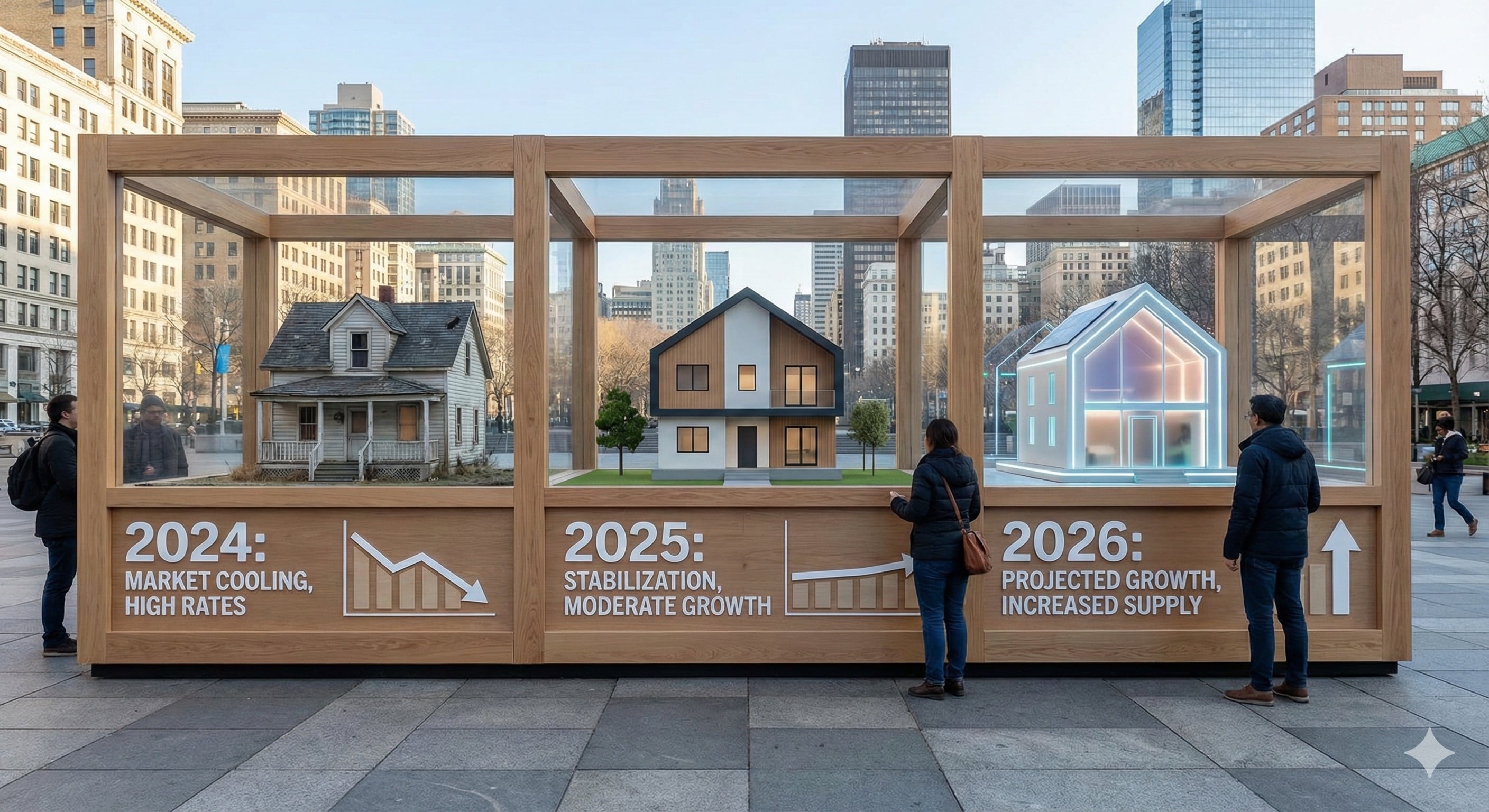
Greenville's real estate market is shifting in ways that could finally work in your favor by 2026, especially if you've been priced out or waiting on the sidelines for better conditions. While many buyers have watched home prices climb beyond their reach over the past few years, several economic indicators suggest the tide is turning toward more balanced market conditions. Mortgage application data shows changing patterns in buyer behavior, and inventory levels are responding to these shifts in ways that create genuine opportunities for prepared buyers. This article breaks down the specific market trends and economic factors that will shape Greenville's housing market through 2026, giving you the knowledge to make strategic decisions rather than reactive ones. You'll learn how declining buyer demand in certain price ranges is creating pockets of opportunity, why mortgage rate fluctuations might actually benefit patient buyers, and which neighborhoods are showing the most promising signs of price stabilization. We'll also examine how local economic development projects and population growth patterns are influencing inventory in different areas of the city. Instead of simply hoping for better market conditions, you'll understand the mechanics behind these changes and how to position yourself to take advantage of them. The key lies in recognizing that market evolution creates winners and losers based on timing and strategy rather than luck. Are you ready to stop waiting for the perfect moment and start preparing for the opportunities that are already taking shape?
Seizing the Best Deals in a Balanced Market
Greenville's housing market has reached a sweet spot where conditions favor buyers who have been waiting for their chance to enter. The city's real estate environment shows clear signs of stabilization, with inventory levels normalizing and competition among buyers decreasing compared to the frenzied years of 2021-2023. This shift creates genuine opportunities for those who understand how to navigate the current conditions effectively.
Market data reveals that homes are staying on the market longer, giving buyers more time to conduct thorough inspections and negotiate terms. The days of bidding wars over every property have largely ended, replaced by a more measured approach where sellers must price competitively to attract serious offers. This environment particularly benefits first-time buyers and those trading up from smaller properties.
Impact of Easing Mortgage Rates
Financing costs are moving in a favorable direction for buyers, though the changes require strategic thinking rather than simply waiting for dramatic drops. "All forecasts expect rates to hold above 6% in 2026, though comfortably below the early-2025 highs." This means buyers can secure more predictable monthly payments without the uncertainty that marked recent years.
The rate environment creates specific advantages for different buyer segments. Those with strong credit profiles can access the most competitive rates, while programs targeting first-time buyers offer additional incentives. Builders are responding to these conditions by offering rate buydowns and incentives to keep new homes moving, creating opportunities in both existing and new construction markets.
Increased Listings and Buyer Opportunities
Housing inventory has expanded significantly, giving buyers genuine choice in their purchasing decisions. "In Greenville, increased inventory may relieve some buyer competition, but standing out still matters when you're making an offer." This means buyers can be more selective about location, features, and price points while still maintaining competitive positioning.
The increased supply spans multiple price ranges and property types, from starter homes to move-up properties. Neighborhoods that were previously out of reach due to limited inventory now offer multiple options, allowing buyers to compare features and negotiate more effectively. This abundance particularly helps buyers who have specific requirements for schools, commute times, or property features.
Timing your entry into this market requires understanding seasonal patterns and local demand cycles. Spring typically brings the highest inventory levels, while fall and winter offer less competition from other buyers. Monitoring how quickly properties move from listing to contract provides insight into neighborhood-specific demand levels.
Working with experienced local agents becomes crucial for identifying properties that meet your criteria before they gain widespread attention. These professionals understand which areas are experiencing the most favorable buyer conditions and can guide you toward properties with the greatest negotiation potential.
Targeting High-Growth Areas for Maximum Return
Smart buyers are focusing their search efforts on specific corridors where infrastructure investments and development projects will drive property appreciation over the next several years. These strategic locations offer the best combination of current affordability and future growth potential, making them ideal for buyers who have been waiting for the right entry point into Greenville's market.
The Northern Downtown Extension represents one of the most significant transformation projects currently reshaping the city's real estate dynamics. This development will expand the footprint of northern downtown Greenville to connect it even more to it’s core through the addition of residential units, retail spaces, and office complexes. Properties within a half-mile radius of this expansion zone are already showing signs of increased buyer interest, as investors recognize the potential for substantial appreciation once the project reaches completion. The extension creates a ripple effect that benefits existing homeowners while providing entry opportunities for new buyers who understand the timing.
Similarly, the Lauren Road Corridor project is converting former industrial sites into modern mixed-use communities that will fundamentally change the character of this area. The transformation includes "new residential and mixed-use communities" designed to attract both businesses and residents seeking contemporary urban living options. Buyers who purchase properties along this corridor now position themselves ahead of the wave of development that will increase both property values and neighborhood desirability. The industrial-to-residential conversion pattern typically generates significant returns for early adopters who recognize the potential before widespread market recognition occurs.
Downtown expansion projects create lasting value through their ability to extend the urban core's influence into previously underutilized areas. These developments don't just add buildings - they create new economic centers that generate employment, attract businesses, and establish lifestyle amenities that weren't previously available. The long-term value proposition stems from the permanent nature of infrastructure improvements and the ongoing economic activity they generate. Properties that benefit from downtown expansion typically see sustained appreciation over decades rather than short-term price spikes.
Location relative to amenities plays a crucial role in determining which properties will experience the strongest appreciation as these development projects mature. Homes within walking distance of new retail centers, restaurants, and office complexes command premium prices compared to similar properties in less connected areas. The convenience factor becomes increasingly important as more professionals seek live-work-play environments that reduce commute times and increase quality of life. Properties near public spaces, parks, and community gathering areas also benefit from the social connectivity these amenities provide.
Evaluating proximity involves more than just measuring distance - it requires understanding how new developments will change traffic patterns, create new commercial hubs, and establish neighborhood identity. A property that sits between downtown and a major new development corridor often experiences dual benefits from both established urban amenities and emerging growth areas. These transitional zones frequently offer the best value propositions for buyers who want urban convenience without paying peak downtown prices.
I don't see a source link or source content summary provided in your request. The and sections are empty. Without knowing what the source contains, I cannot determine which text in the section should be hyperlinked.
Please provide the source link and source content summary so I can add the appropriate external linking to the section.
Understanding Local Economic Indicators
Economic data provides the foundation for making informed purchasing decisions in Greenville's evolving real estate market. These numerical snapshots reveal patterns that help buyers understand when conditions favor their interests and when patience might serve them better. Rather than relying on general market sentiment or media headlines, successful buyers examine specific metrics that directly impact home values and purchasing power in their target areas.
Median home prices in Greenville have experienced notable fluctuations over the past three years, creating distinct patterns that reveal buyer opportunities. The data shows periods where price appreciation slowed significantly, allowing wages and savings to catch up with housing costs. These cooling periods typically last 6-12 months and often coincide with seasonal changes in buyer activity. Transaction volume tells an equally important story, as months with fewer closed sales often indicate reduced competition among buyers. When fewer properties change hands, sellers become more motivated to negotiate on price, closing costs, and repair requests. This dynamic particularly benefits buyers who can move quickly when the right property becomes available.
Historical price movements in Greenville demonstrate cyclical patterns that repeat roughly every 5-7 years, providing valuable context for timing purchase decisions. The city experienced rapid appreciation from 2020-2022, followed by a stabilization period that continues into 2024. This pattern mirrors previous cycles where periods of intense growth gave way to more moderate increases that lasted 2-3 years. Understanding these cycles helps buyers recognize when current conditions represent temporary adjustments rather than permanent market shifts. Properties purchased during stabilization periods historically appreciate more steadily over the following decade compared to those bought at peak pricing moments.
Influence of Local Economic Factors
Employment growth and wage increases directly correlate with housing demand in specific Greenville neighborhoods, creating predictable patterns for strategic buyers. Areas near major employers like BMW, Michelin, and the expanding healthcare systems show consistent price stability even during broader market corrections. The presence of diverse industries means that economic downturns affecting one sector don't necessarily impact all residential areas equally. Manufacturing job growth particularly influences demand for homes in the $200,000-$350,000 range, while professional services expansion affects higher-priced segments. Population migration from other states continues to drive demand in suburban areas, though this influx has become more selective about price points and neighborhood amenities.
Monitoring these economic indicators requires tracking multiple data sources that update monthly or quarterly. The South Carolina Department of Employment and Workforce releases regional employment statistics that show which sectors are hiring and at what wage levels. Building permit data from Greenville County reveals where new construction is planned, indicating areas where supply might increase. Commercial real estate activity often precedes residential demand changes by 6-12 months, making it a useful leading indicator for residential buyers.
Hot Neighborhoods for Savvy Investments
Several distinct areas within Greenville County present compelling opportunities for buyers seeking properties with strong appreciation prospects. These zones combine current affordability with clear catalysts for future value growth, making them particularly attractive for buyers who have been waiting for the right moment to enter the market. The key lies in recognizing neighborhoods where fundamental changes are already underway but haven't yet been fully reflected in property prices.
The Verdae area stands out as a prime example of strategic positioning, where mixed-use development continues to reshape the residential character. Properties near the Verdae Boulevard corridor benefit from proximity to shopping, dining, and entertainment venues while maintaining reasonable entry prices compared to downtown alternatives. The ongoing expansion of medical facilities and professional services in this zone creates sustained demand from employees seeking convenient housing options. Similarly, the Pelham Road extension area offers buyers access to established amenities while positioning them ahead of planned infrastructure improvements that will enhance connectivity to both downtown and suburban employment centers.
Key Factors in Neighborhood Selection
Property desirability hinges on three fundamental elements that determine both immediate livability and long-term value retention. Proximity to quality schools, major employers, and transportation routes forms the foundation of any sound investment decision. Homes within a 10-minute drive of highly-rated elementary schools consistently outperform similar properties in less desirable school zones, regardless of other amenities. The presence of walkable retail options, parks, and community gathering spaces adds measurable value that extends beyond simple convenience factors.
Natural features significantly influence property appreciation patterns, with homes offering mountain views, lake access, or mature tree coverage commanding premium prices even during market corrections. The Reedy River corridor exemplifies this principle, where properties with water views or walking access to the Swamp Rabbit Trail maintain stronger resale values than comparable homes in purely residential subdivisions. Elevation changes within neighborhoods also create micro-markets where homes on higher ground or with scenic overlooks appreciate faster than properties on busy streets or in low-lying areas.
Existing home sales, median existing-home price, and total housing inventory serve as reliable indicators for evaluating neighborhood potential. These metrics reveal whether current pricing reflects true market value or temporary fluctuations that create buying opportunities. Neighborhoods showing stable inventory levels with moderate price appreciation typically offer better long-term prospects than areas experiencing rapid price swings or extended listing periods.
Avoiding Overpriced Listings
Recognizing inflated pricing requires comparing similar properties across multiple neighborhoods rather than focusing solely on recent sales within a single area. Sellers in less desirable locations often price their homes based on peak market conditions or aspirational comparisons to premium neighborhoods. Properties that remain on the market for more than 60 days in the current environment frequently indicate pricing that exceeds realistic market expectations.
Distance from major amenities reveals pricing discrepancies that favor informed buyers. Homes located more than 15 minutes from downtown, quality schools, or major shopping areas should reflect this inconvenience through lower per-square-foot pricing. Properties that don't offer this discount relative to better-positioned alternatives represent poor value propositions regardless of individual home features or condition.
Examining neighborhood composition helps identify areas where asking prices may not align with long-term appreciation potential. Subdivisions dominated by rental properties or showing signs of deferred maintenance typically experience slower price growth even when individual homes appear well-maintained. Traffic patterns, noise levels, and proximity to commercial or industrial uses also influence realistic pricing expectations that sellers may not fully acknowledge in their listing strategies.
Final Thoughts
Greenville's 2026 market presents genuine opportunities for buyers who have weathered years of challenging affordability conditions. We've examined how shifting buyer demand patterns, mortgage application trends, and inventory changes create windows of opportunity that smart buyers can use to their advantage.
The key strategies we covered - timing purchases with market cycles, understanding the relationship between mortgage rates and buyer competition, and recognizing neighborhoods where inventory increases ahead of price adjustments - give you concrete tools for making better decisions. These aren't theoretical concepts but practical approaches based on observable market forces.
This information matters because it transforms you from a reactive buyer into a strategic one. Instead of simply hoping prices drop, you now understand the specific indicators that signal when favorable conditions emerge. You can spot early signs of inventory buildup in certain areas, recognize when mortgage application volumes suggest reduced competition, and position yourself to act when others hesitate.
The economic shifts happening in Greenville aren't working against buyers forever. Market corrections create real chances for those who prepare properly and move decisively when conditions align. Your patience during the difficult affordability period positions you well for the opportunities ahead.
Start monitoring the specific metrics we discussed - mortgage application volumes, days on market by neighborhood, and inventory-to-sales ratios. Connect with local real estate professionals who understand these trends. Most importantly, prepare your finances now so you can move quickly when the right opportunity appears. The market rewards buyers who combine preparation with informed timing.
Check out this article next